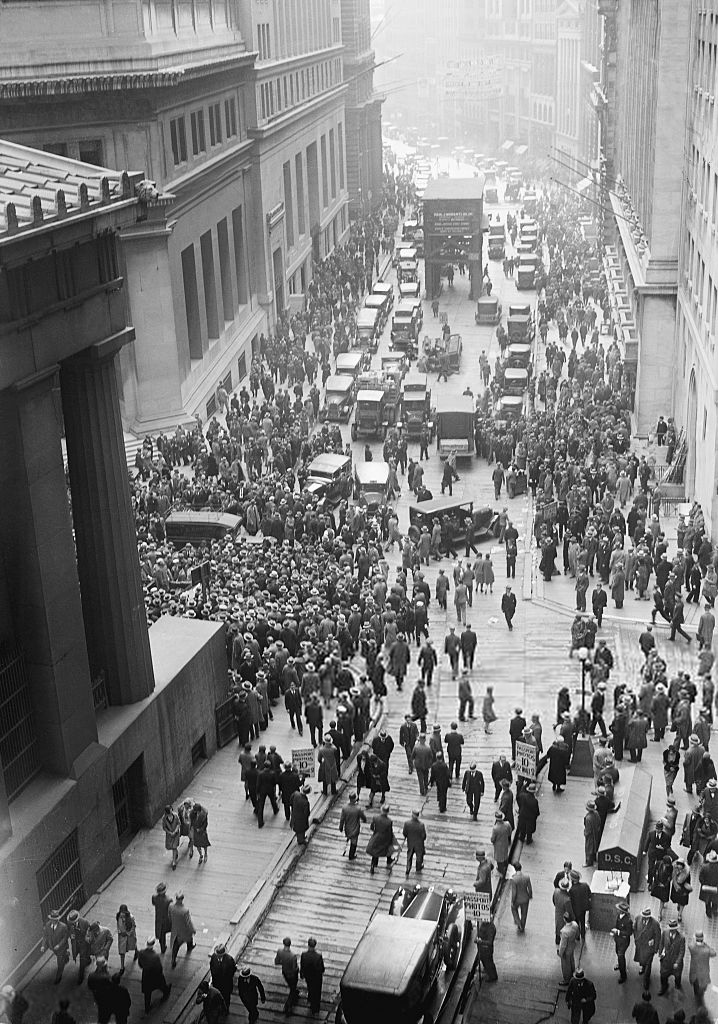
Black Tuesday: The 1929 Wall Street Crash Unpacked
The infamous Börsencrash 1929, more commonly known as the Wall Street Crash of 1929, the Great Crash, or simply the Crash of '29, stands as a monumental and harrowing chapter in economic history. It was a cataclysmic event that unfolded across several critical days in late October 1929, sending shockwaves far beyond the trading floors of the New York Stock Exchange (NYSE) and ultimately plunging the world into the Great Depression. This article will delve into the timeline of the crash, explore its underlying causes, draw parallels to modern markets, and extract enduring lessons from this unforgettable disaster.
The Fateful Days: From Black Thursday to Black Tuesday
The seeds of panic were sown long before the market's dramatic collapse, but the crisis truly erupted on October 24, 1929, a day now etched into history as Black Thursday. On this day, an unprecedented wave of selling hit the NYSE, leading to a precipitous drop in share prices. While bankers and financial institutions made concerted efforts to stem the tide, offering large sums to buy up shares and momentarily stabilizing the market, it was merely a brief respite. The subsequent days saw continued volatility, interspersed with moments of desperate recovery that proved ultimately futile against the mounting pressure.
The true climax arrived on October 29, 1929, forever known as Black Tuesday. This was the day share prices on the NYSE utterly collapsed, marking the most devastating single day in stock market history. Millions of shares changed hands in a frenzy of panic selling, as investors, from the largest institutions to ordinary citizens, scrambled to offload their holdings, often for a fraction of their recent value. The scale of the financial destruction was immense, wiping out vast fortunes and shattering the dreams of countless speculators. The sheer speed and magnitude of the crash left economists and the public stunned, highlighting a glaring inability to predict or prevent such a profound market failure.
Beneath the Surface: The Roaring Twenties and the Speculative Bubble
To understand the depth of the Börsencrash 1929, one must look back at the preceding decade – the "Roaring Twenties." This era was characterized by unprecedented prosperity and an intoxicating sense of optimism, particularly in New York City, which had solidified its position as a global financial powerhouse. Wall Street became the epicenter of a booming economy, fueled by industrial growth, new technologies, and a seemingly endless appetite for consumer goods. This prosperity, however, masked an increasingly dangerous undercurrent of rampant speculation.
Many believed the market had entered a "permanently high plateau," a sentiment famously captured by economist Irving Fisher shortly before the crash. Despite warnings from certain economists, particularly those of the Austrian School, against the dangers of unchecked speculation, these cautions went largely unheeded. A primary driver of this market euphoria was the widespread practice of buying on margin. This allowed investors to purchase stocks with borrowed money, often putting down as little as 10% of the share price. While this amplified gains during the bull market, it also magnified losses exponentially when prices began to fall, forcing margin calls that triggered further selling and accelerated the downward spiral. This unsustainable debt-driven growth created a massive speculative bubble, making the market extraordinarily vulnerable to any shift in investor confidence. For a deeper dive into the factors that converged to create this volatile environment, explore our related article: Beyond Black Thursday: Causes of the Great Crash of 1929.
Echoes of the Past: Parallels and Enduring Lessons
The immediate aftermath of the Börsencrash 1929 saw the world plunge into the Great Depression, an economic downturn of unprecedented scale and duration. This inextricable link has ensured that the crash remains a subject of intense study and debate. Economists, historians, and financial experts continue to dissect its causes, not merely to understand history, but to learn from it and prevent its repetition. While regulatory bodies like the Securities and Exchange Commission (SEC) and mechanisms such as circuit breakers have been instituted to safeguard markets since 1929, the fundamental lessons often revolve around human behavior and systemic vulnerabilities.
Intriguingly, contemporary analyses reveal striking parallels between the run-up to the 1929 crash and aspects of today's markets. Bestselling author and financial journalist Andrew Ross Sorkin, in his book "1929," meticulously explores these similarities. Sorkin points out that much like today, the markets in the 1920s were propelled to dizzying heights by new technologies – radio, automobiles, aviation – mirroring the enthusiasm surrounding current tech innovations. He vividly recounts scenes from the iconic Plaza Hotel in New York, a setting in his book, where prominent figures like Charlie Mitchell (chairman of what is now Citibank and a key player in the speculative bubble) and General Motors founder William Durant dined, observed by an admiring public. This atmosphere of high society, celebrity, and unquestioning belief in perpetual growth resonates eerily with aspects of modern financial culture.
Sorkin's insights underscore a critical point: while the specific technologies and financial instruments may evolve, human tendencies towards irrational exuberance, herd mentality, and excessive risk-taking often remain constant. Understanding these psychological drivers is perhaps the most crucial lesson from the Börsencrash 1929. For more insights into how these historical events inform contemporary financial thinking, see our article: Börsencrash: Modern Market Parallels and Lessons Learned.
Safeguards and the Human Element: Avoiding Future Calamities
The legacy of the 1929 crash is not just one of devastation, but also of reform. The subsequent creation of the SEC, the establishment of robust banking regulations, and the implementation of mechanisms like daily trading limits and circuit breakers on stock exchanges are direct responses aimed at preventing a recurrence of such a catastrophic collapse. These measures provide vital structural integrity to financial markets, offering cushions against extreme volatility and promoting greater transparency.
However, as history consistently demonstrates, regulations alone are not enough. The ultimate safeguard against future financial crises lies in the attitudes and actions of those involved in the world of finance and business. This includes:
- Prudent Investment Strategies: Diversification, long-term perspectives, and avoiding excessive leverage (like buying on margin) are timeless principles for individual investors.
- Critical Thinking and Skepticism: The ability to question market euphoria, identify speculative bubbles, and heed warnings from contrarian voices is paramount.
- Ethical Leadership: Financial leaders and policymakers bear a heavy responsibility to prioritize stability and long-term economic health over short-term gains and unchecked risk.
- Continuous Learning: Acknowledging that market dynamics evolve and past lessons must be continuously re-evaluated and applied to new contexts.
The suffering caused by massive unemployment and loss of savings during the Great Depression served as a harsh reminder of the real-world consequences of financial instability. While perfect foresight is impossible, a commitment to sound economic principles, robust regulatory frameworks, and, most importantly, a collective vigilance against the allure of irrational exuberance can help navigate the complexities of modern financial markets.
Conclusion
The Börsencrash 1929 remains a defining moment, a stark reminder of the fragility of financial markets and the profound impact they can have on global economies and individual lives. From the heady days of the Roaring Twenties to the brutal shock of Black Tuesday, and through the long shadow of the Great Depression, the events of 1929 offer invaluable lessons. By understanding the historical context, recognizing the human elements of greed and fear, and continually adapting our financial systems and individual investment philosophies, we can strive to build a more resilient and equitable economic future, learning from the past to better navigate the challenges of tomorrow.